Designing a Home That Feels Safe: The Intersection of Wellness and Homemaking
Your home communicates with your nervous system before your conscious mind registers it. Every room is sending signals of safety or threat. This post introduces the five design principles for emotional safety—containment, warmth, simplicity, nature, and permission—and applies them room by room.
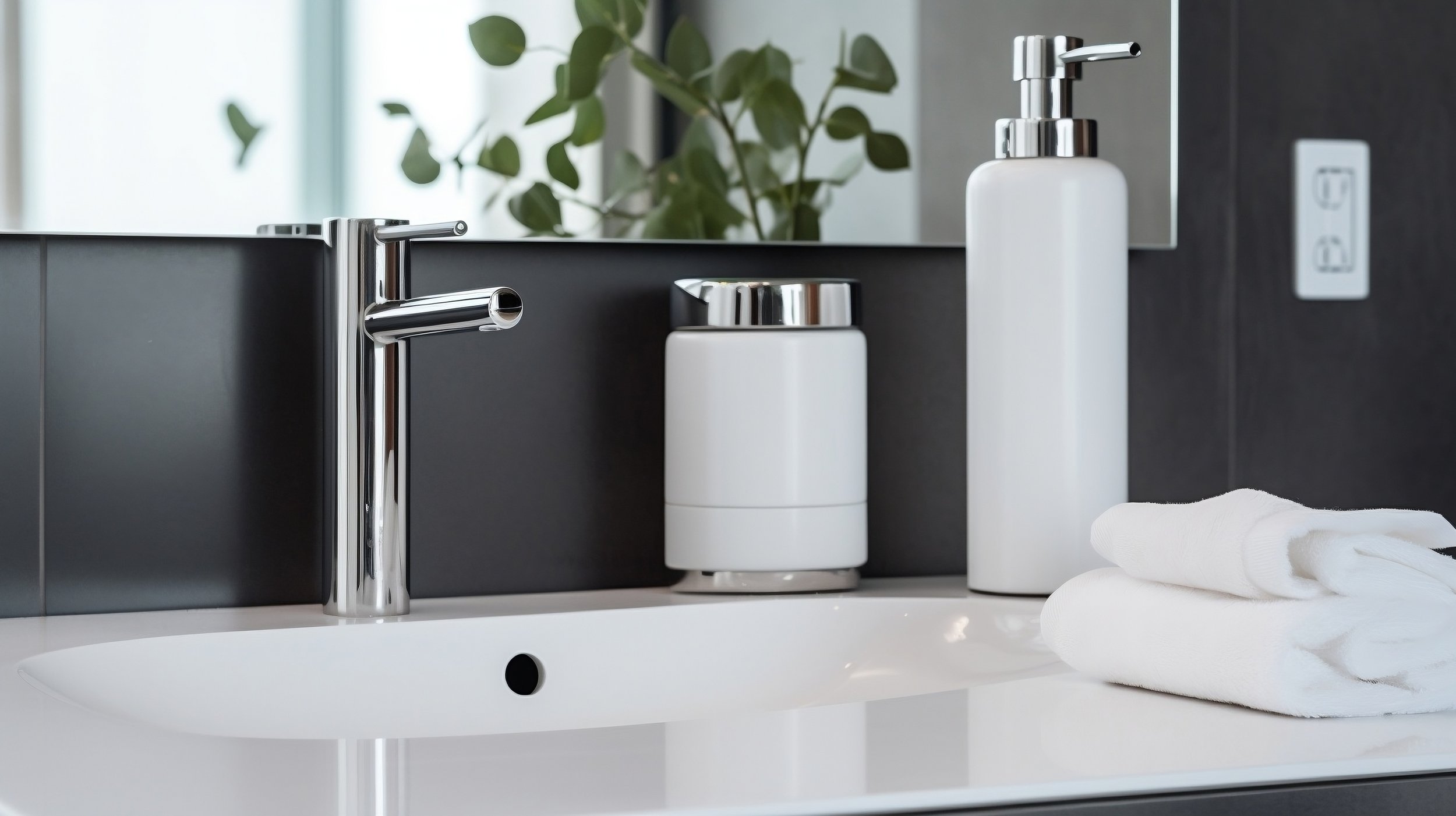
Table of Contents
Neuroaesthetics: The Science of How Space Affects Feeling
The Five Design Principles for Emotional Safety
Room-by-Room Application
Your Free Download + Next Steps
FAQs About Designing for Mental Health
You've invested in therapy. You journal. You meditate. You do breathwork. And then you walk into your house and your shoulders immediately rise to your ears. What if the missing piece isn't another practice—it's your environment?
Your home is communicating with your nervous system before your conscious mind has time to register it. Every room is sending signals: safe or threatening, calm or chaotic, resting place or demand. Most of us have never deliberately shaped those signals.
This post is the practical guide to doing exactly that—redesigning your home as a nervous system ally rather than an opponent.
Neuroaesthetics: The Science of How Space Affects Feeling
Neuroaesthetics is the study of how physical environments interact with the brain and nervous system. It's a young field, but its findings are consistent and meaningful: our spaces shape our psychological states in measurable ways.
Key research findings: cluttered environments measurably increase cortisol production. Warm lighting activates the parasympathetic (rest-and-digest) nervous system, while cool blue light activates alertness and vigilance. Natural materials—wood, stone, linen, plant matter—reduce heart rate and blood pressure. Spatial containment—corners, smaller rooms, spaces with clearly defined edges—creates a felt sense of protection that allows the nervous system to settle.
The implication is significant: your home's design is not purely aesthetic. It is a wellness intervention that runs 24 hours a day, seven days a week. Getting it right doesn't require a renovation. It requires understanding what your nervous system is actually responding to.
The Five Design Principles for Emotional Safety
1. Containment
The nervous system relaxes when it feels enclosed rather than exposed. Vast, open, minimally furnished spaces can feel expansive to look at but activating to inhabit. Principles of containment include: corner seating arrangements where your back is supported, bookshelves used as room dividers to define intimate zones within larger rooms, layered textiles (throw blankets, rugs, cushions) that create tactile enclosure, and canopy or draped elements over sleeping areas.
Even in a small apartment, you can create containment by orienting furniture toward corners rather than walls, and by defining specific zones with rugs and lighting.
2. Warmth
Warmth operates on two levels: visual and tactile. Visual warmth comes from warm-toned lighting (2700K or lower), natural wood surfaces, earth-tone and neutral palettes (terracotta, sage, cream, warm taupe), and soft textiles. Tactile warmth comes from textures that invite touch—linen, cotton, wool, natural fiber rugs.
Cool, bright, clinical spaces—white walls, chrome fixtures, cool LED lighting, hard surfaces—keep the body in alert mode. They signal 'this is a functional space' rather than 'this is a place you can rest.' Even small warm-toned additions (a wood bowl, a linen throw, a table lamp) shift the sensory message significantly.
3. Simplicity
Visual density—too many objects competing for attention—is one of the most underrecognized sources of chronic low-grade nervous system activation. Every item in your visual field is a micro-demand on your attention and processing capacity.
Simplicity doesn't mean minimalism. It means intentionality. One piece of meaningful art instead of a gallery wall. Clear counter surfaces instead of styled vignettes. A shelf with space between objects rather than objects packed edge to edge. Empty space is not wasted space—it's breathing room for the nervous system, and it's what makes the objects you do keep visible and meaningful.
4. Nature
Biophilic design—incorporating natural elements into the built environment—is one of the most evidence-backed interventions for stress reduction. Plants measurably reduce cortisol and increase perceived calmness. Natural light regulates circadian rhythms and supports mood. Organic materials (wood, stone, jute, cotton) signal 'living world' to a nervous system evolved in natural environments. Even nature sounds—birdsong, running water, rain—reduce physiological stress markers.
You don't need a botanical garden. Three plants, a window you keep uncovered, and a natural fiber rug make a meaningful difference.
5. Permission
The most overlooked dimension of emotional safety in home design is what the space communicates about how you're allowed to feel and be. Spaces that are entirely functional—optimized for cooking, cleaning, working—signal 'this is a space for performance.' They offer no permission to rest.
Permission cues look like: a reading chair with good lighting and a blanket that says 'sit here and do nothing.' A made bed that invites you to lie down before 9pm. A kitchen corner with a stool that says 'sit while things simmer.' These are small but powerful signals that your nervous system reads as: in this space, you are allowed to rest.
Room-by-Room Application
Kitchen
Clear counters as the non-negotiable—this is the kitchen's most impactful nervous system variable. Add warm under-cabinet lighting as the evening default. Move frequently-used items into closed storage where possible to reduce visual density. Implement the closing kitchen ritual: 10 minutes each evening to signal that this room, the day's most active and demanding space, is done.
Living Room
Reduce furniture to a conversation-friendly arrangement that faces people toward each other rather than toward the television. Create one cozy anchor—a reading chair with a throw and a lamp—that is explicitly for resting, not working. Manage the soundscape: choose a default that supports the evening (low music, brown noise, or silence) rather than leaving the television on as ambient background.
Bedroom
The bedroom deserves the most protection as a nervous system sanctuary. No work-related materials in the bedroom. No screens within 90 minutes of sleep (or at minimum, dimmed and warm-toned). Blackout curtains to support melatonin production. One comfort texture you specifically love—a weighted blanket, a specific pillow, a particular sheet weight. The bedroom should signal, unambiguously: this space is for restoration.
Bathroom
Simplify products displayed on the counter and in the shower—visual clutter in a small space amplifies quickly. Add one deliberate sensory pleasure: a candle, a diffuser, a plant that thrives in humidity. Make the mirror area calming rather than clinical—warm lighting rather than overhead fluorescence, minimal visible product, one meaningful object.
Your Free Download + Next Steps
Download The Emotional Safety Home Audit — a room-by-room guide to identifying what's activating your nervous system and what to change first. Free with email signup.
The Undone Method Course ($297) is the complete Rebuild framework—including the full home-as-nervous-system-environment module, guided design exercises, and Lauren's personal coaching videos on designing for calm.
The Undone Community is where women share their home transformations in real time—before and afters, budget solutions, and the emotional shifts that come with each change. Join 1,500+ women for $10/month.
FAQs About Designing for Mental Health
Do I need to spend money to implement these principles?
Most of the highest-impact changes are free: clearing surfaces, changing your lighting after 6pm, rearranging furniture for containment, opening curtains for natural light. The paid elements of neuroaesthetic design—plants, warm-toned bulbs, natural fiber textiles—are investments that start at under $20. A full home renovation is not required.
I'm a renter and can't make structural changes. Can this still work?
Yes, completely. The five principles are almost entirely implemented through objects, arrangement, and lighting rather than architecture. Warm bulbs, removable wall hooks for containment, furniture arrangement, plants, and layered textiles are all renter-friendly and reversible.
What if my partner doesn't share my design sensibility?
Focus your efforts on the spaces you use most independently—your bedroom corner, your bathroom, your primary seating area—and negotiate the shared spaces toward more neutral implementations of warmth and simplicity. One plant in the kitchen. One table lamp instead of the overhead. Small changes that don't require complete agreement but still shift the sensory environment.
How does this relate to mental health treatment?
Environmental design is not a substitute for mental health treatment—it's a complement. For women managing anxiety, depression, ADHD, or trauma, a regulation-supportive home environment reduces the daily sensory load that would otherwise compound existing symptoms. It doesn't replace therapy. It makes everything else more sustainable.